
How to Make a Bee-Friendly Garden Border
Why the Border Is the Best Bit of the Garden for Bees
If you want to do one generous thing for British pollinators this year, do it in the flower border. Unlike a wildflower meadow, which takes years to settle, a border is under your hand from the first forkful of compost. You choose the plants, you choose the timing, and you can pack more nectar and pollen into three metres of sunny wall than you will find in half an acre of close-cropped paddock. The aim is simple: make a border where a bumblebee can find a full meal within a metre or two of landing, and where something is in flower from the first crocus to the last aster.
Here is how to build it, plant by plant and season by season.
Choose Single Flowers, Not Frilly Doubles
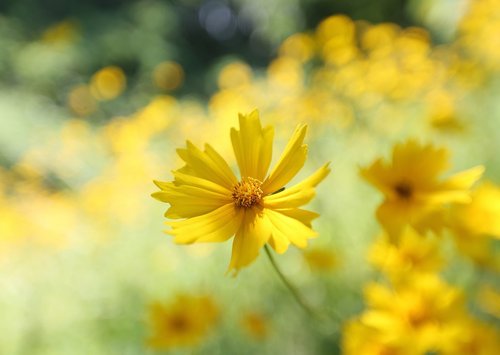
The single most useful rule for a bee-friendly border is to buy single-flowered plants. A single flower has its stamens and nectaries on show; a double has had them bred into extra petals until there is nothing left worth visiting. When you are standing in the garden centre, look for a clear, open centre — often a ring of yellow stamens — and avoid anything that looks like a pom-pom.
- Good: open daisies, umbellifers, pea flowers, salvias, campanulas, hardy geraniums, single roses.
- Poor: double begonias, double pelargoniums, most busy Lizzies, drumstick alliums and anything sold as "sterile" or "self-cleaning".
Bees also have different tongues. Short-tongued bumblebees and honeybees need shallow, open flowers such as oxeye daisy, marjoram and yarrow. Long-tongued bumblebees — the garden bumblebee and the carder bees — can reach into deep funnels like comfrey, deadnettle, foxglove and monkshood. Plant both sorts and you will feed the whole shift.
Go Native Where You Can, and Near-Native Where You Cannot
British native plants have evolved alongside British bees, and many are the most reliable nectar sources you can put in the ground. They are also, conveniently, some of the toughest. A native-leaning border is not a scruffy one; it is a border with good bones.
- Spring: lungwort (Pulmonaria), hellebore, native daffodil, cowslip, willow, flowering currant, apple blossom.
- Early summer: comfrey, meadow cranesbill, oxeye daisy, columbine, foxglove, bird's-foot trefoil.
- High summer: marjoram, catmint, viper's bugloss, knapweed, betony, lavender, borage, phacelia.
- Late season: sedum, aster, helenium, eryngium, echinacea, devil's-bit scabious, single dahlias.
You can mix in well-behaved non-natives — catmint, lavender, salvia, hardy geraniums and sedum are all excellent, and they hold the border together visually when the natives go over.
Plant in Generous Drifts, Not Ones and Twos
This is the change that makes the biggest difference, and it costs nothing but a little restraint. Bees are foragers with a mental map. They find a patch of good flowers and work it hard, flying in tight loops rather than burning energy checking every lonely specimen. A single comfrey in a sea of mulch is a wasted plant; five comfrey planted together is a fuel station.
So plant in drifts. Aim for a block at least a metre across, using five to nine plants of a single variety. If your border is small, use one drift per season rather than one of everything. Repeat the same plant in two or three places along the border and a bee working the line will never be more than a few wingbeats from the next mouthful.
Stretch the Season from March to October
A border that flowers gloriously for six weeks in July is a larder that is empty when bees need it most. Bumblebee queens emerge in early spring and must find food fast; solitary bees are on the wing just weeks later; late-season bumblebees and the new queens need fuel to build up fat reserves before hibernation. Plug the gaps deliberately.
- March and April: willow, crocus, lungwort, hellebore, cowslip, flowering currant.
- May and June: comfrey, cranesbill, foxglove, columbine, allium, bird's-foot trefoil.
- July and August: marjoram, lavender, catmint, borage, knapweed, viper's bugloss.
- September and October: sedum, aster, helenium, eryngium, single dahlia, ivy.
Deadhead the early performers to push more flowers, but leave the seedheads on eryngium, knapweed and teasel — they feed finches and stand beautifully through the winter.
Small Practical Touches That Make a Real Difference
Site the border in full sun if you can, with a warm, sheltered edge — a south-facing wall, a hedge or a low fence. Bees are cold-blooded and will not work a chilly, windy corner, however good the planting.
- Skip the pesticides. Even a "bee-safe" spray applied to an open flower will kill the bees that visit it that afternoon.
- Leave some bare ground. Around two-thirds of our solitary bees nest in the soil, so a patch of open, sunny earth between plants is a nursery, not a weed bed.
- Do not cut everything back in autumn. Hollow stems and seedheads are winter bedrooms for bees and other insects. Tidy in late spring instead.
- Add a shallow water dish with a few pebbles in it, topped up through summer.
- Use a light mulch of compost rather than a thick bark blanket, so ground-nesting bees can still reach the soil.
Get these four things right — single flowers, native plants, generous drifts and a long flowering season — and your border will hum from March to October. It will also, quietly, be one of the most useful pieces of habitat on your street.
tag: Garden Wildlife

Oliver Bennett Author
Offer high-fat foods, keep feeders clean and provide unfrozen water to help garden birds survive sudden cold snaps.
YOU MAY ALSO LIKE
Winter Bird Feeding: Best Practices for Gardeners
Aug 15
10Fallen branches and standing dead trees support fungi, beetles and bats, so leave them in place where safety allows.
read more
Why Dead Wood Matters for Woodland Creatures
Aug 10
10From spring pond checks to autumn leaf piles, a seasonal approach keeps habitats thriving without overwhelming the average gardener.
read moreWildlife
-

ERRIC CATONA
Learn key markings, flight periods and favourite nectar plants to tell apart meadow browns, peacocks and small tortoiseshells.
May 19, 2016 at 5.12 pm
Reply
ERRIC CATONA
These colourful habitats support pollinators, improve soil health and provide a beautiful alternative to traditional closely mown lawns.
May 19, 2016 at 5.12 pm
Reply -
ERRIC CATONA
Use old pallets, bricks, bamboo canes and dead leaves to create shelter for solitary bees, ladybirds and other beneficial insects.
May 19, 2016 at 5.12 pm
Reply
Conservation
Your email address will not be published.